
Why Us?
In a nutshell? Experience, professionalism, compassion, and empathy.
Established in 1820, Columbia Cemetery is a place of deep historical significance and lasting care. Home to veterans, community leaders, and generations of local families, our 34-acre grounds reflect a legacy of honor and remembrance. With perpetual care and thoughtfully preserved historic sections, we offer a dignified resting place rooted in tradition and respect.

The Columbia Cemetery has been in use since 1820, when six town lots in the southwestern corner were set aside for common burying ground. Nine years later, on March 17, 1829, Daniel P. Wilcox and his wife, Elizabeth, deeded the lots to the trustees of the Corporation of Columbia.
The entrance to this cemetery was on Locust Street with gates that now front the historic Maplewood House, built by Slater and Margaret Lenoir in 1877 and now a historic site in Nifong Park.
Under the city’s care, the cemetery fell into disrepair. The April 27, 1849, issue of the Statesman includes a stinging editorial describing the “disgraceful condition of the Grave-Yard.” Fences were down, lanes were impassable and trees overgrown. The neglect, and possibly haphazard burying practices, led the General Assembly of Missouri to incorporate the Columbia Cemetery Association on Feb. 28, 1853.
The Act of Incorporation placed the old cemetery in the hands seven trustees — Jefferson Garth, Jas. R. Boyce, Moss Prewitt, W.F. Switzler, Richard C. Branham, H.H. Ready and James S. Rollins — and any successors they might choose. They were to take title to those lots used for burial, had power to purchase land, divide it and sell lots. Money raised was to be tax-exempt and used to maintain and benefit the cemetery.
By Oct. 22, 1858, according to the Statesman, the new association had bought land west of the graveyard and were enclosing the cemetery with a fence and laying out plots, walks and roadways. On Nov. 19, 1858, the sale of lots began. The following year, the trustees bought land to provide an entrance from Broadway.
In 1873, another purchase to the south and east brought the size of the cemetery to 24 acres and, finally, the city council of Columbia officially conveyed the original six lots to the association.
Subsequent land transactions increased the size of the cemetery to 34 acres, including several historic areas. Besides the original lots, there are Jewish and black sections. Today, perpetual care extends to every corner of the property and sites are limited only by availability and preference.
A limestone vault house was added in 1877 for storing bodies if they could not be buried immediately, as was sometimes the case in the winter when the ground was frozen. The vault house still stands in the middle of the cemetery near Prewitt and Todd streets and underwent a major renovation in 2009.
Within the cemetery’s grounds lie two Revolutionary War soldiers — Samuel Elgin and William Orear — and veterans of every war since the War of 1812. There are at least six presidents of the University of Missouri, presidents of Stephens and Christian (now Columbia) colleges and a short-term governor, Abraham J. Williams.
Its monuments are a roll call of Boone County’s pioneer and influential families. Among them are Barr, Bowling, Bradford, Camplin, Cochran, Conley, Dorsey, Douglass, Garth, Gentry, Guitar, Hickman, Horner, Keene, Lenoir, McAlester, Maupin, Moss, Phillips, Prewitt, Price, Rollins, Schwabe, Stephens, Todd, Waters, Watson and Wilson.
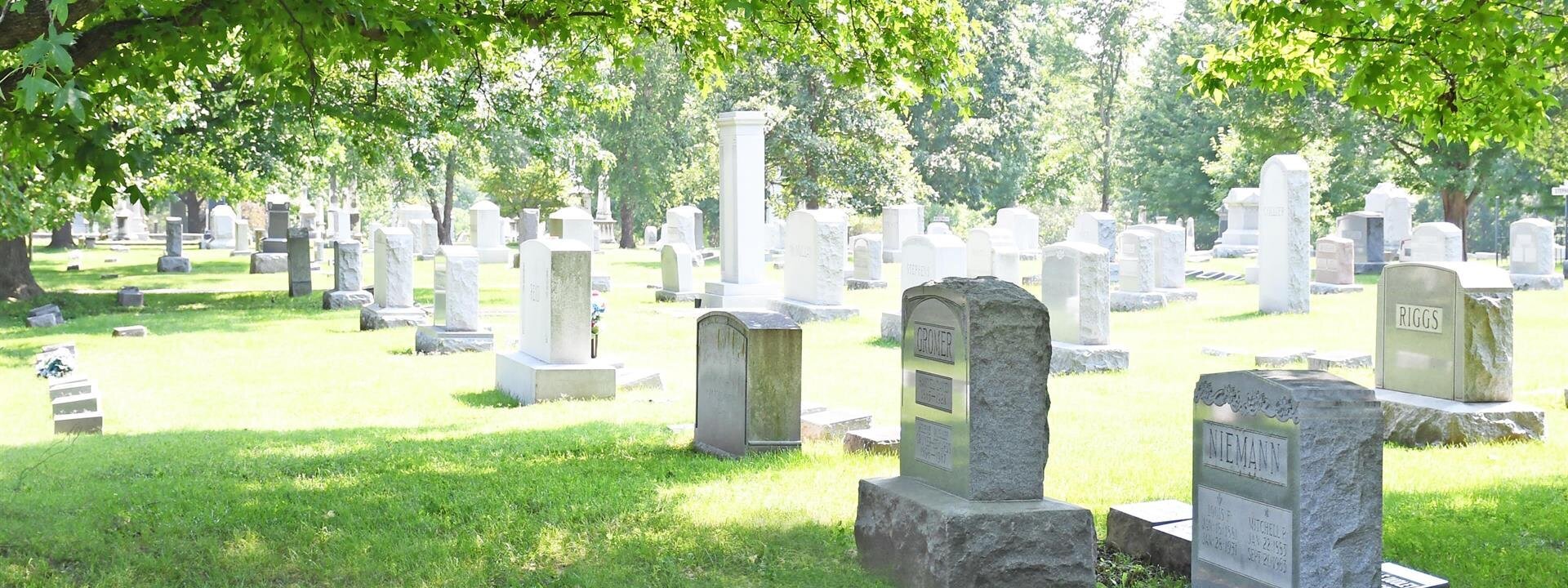
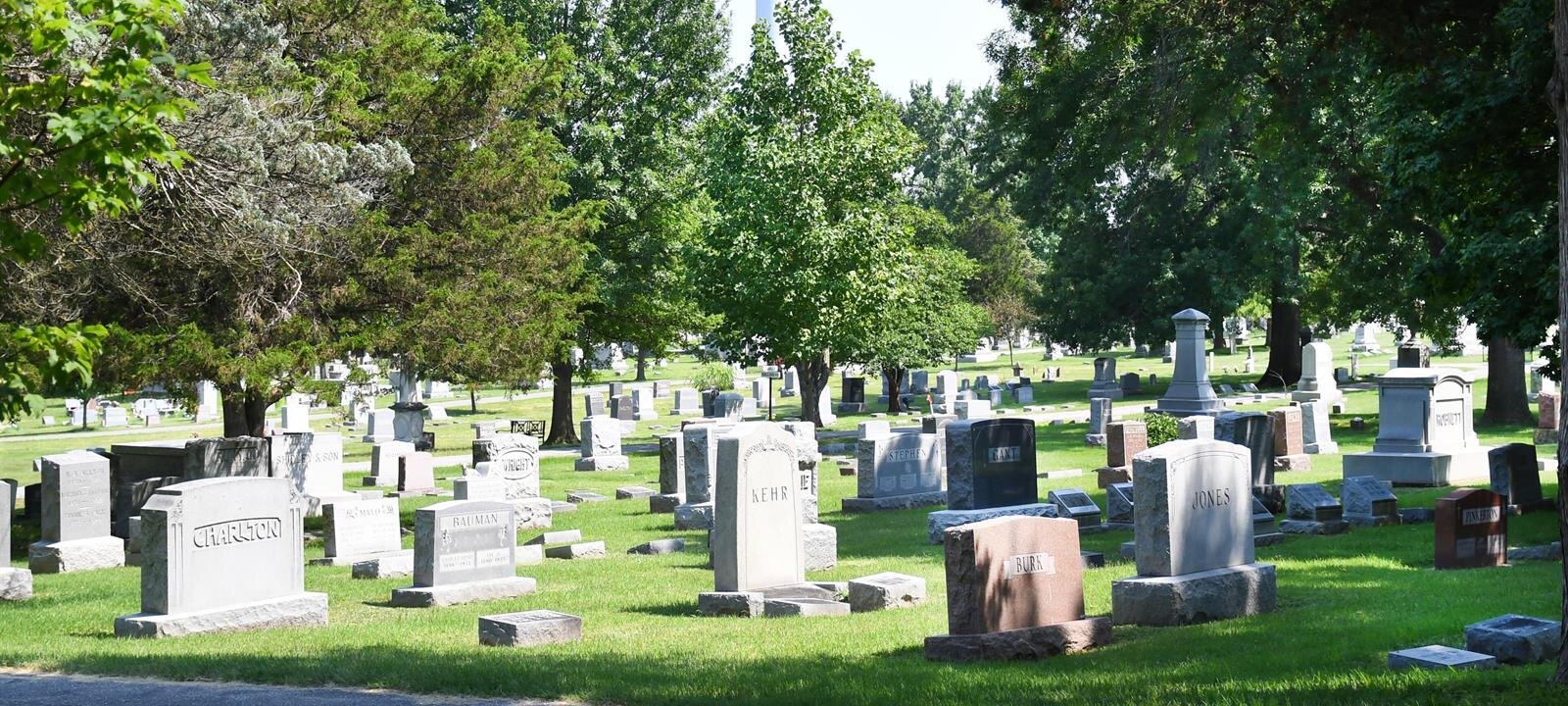
The many sizes, shapes and symbols of the old markers — from very grand to very simple — gives a sense of dignity and peace.
Related Links



Explore Our Location
See where we are located.